

Recently, I gave a refresh to the “Afton Mountain: Victim of Progress” photo set from 2003. That’s the original Afton Mountain photo set, when all of the buildings were still largely intact (compare to the later “Afton Mountain: A Modern Ruin” from 2011). I gave a refresh to that set because I didn’t like the photo processing work on those images, and thought that I could do it better in the here and now.
For some history, I shot those photos on September 10, 2003, and the set was released on November 3. Then in 2012, as part of the conversion of the entire site to WordPress, I reprocessed the photo set from the originals, along with all of my other photo work that was done prior to 2008. This was done in order to create production masters for those older sets, remove the watermarks that I had previously placed on those older photos, and also improve on my hideous editing work. However, for the Afton Mountain photo set, I inadvertently ended up making the new version of the photos a bit dark, and they ended up with a slightly blue cast on them. The originals had a slight yellow cast to them, so apparently I overcompensated when I tried to correct for that. Hey – nobody’s perfect.
Here’s a comparison using the lead shot in the set, showing the previous iteration of the photo set from 2012, and the refreshed version:
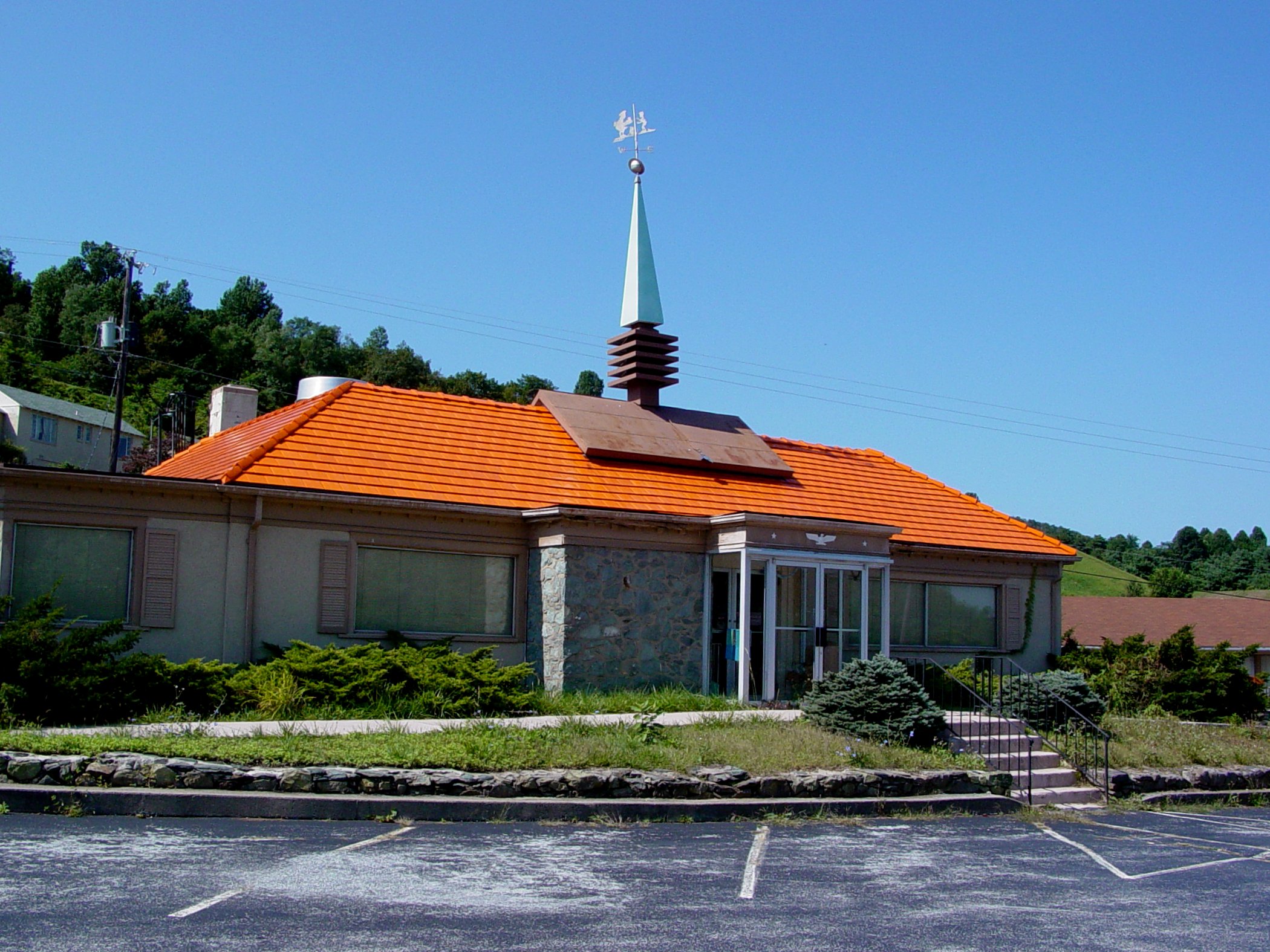
2012 revision.
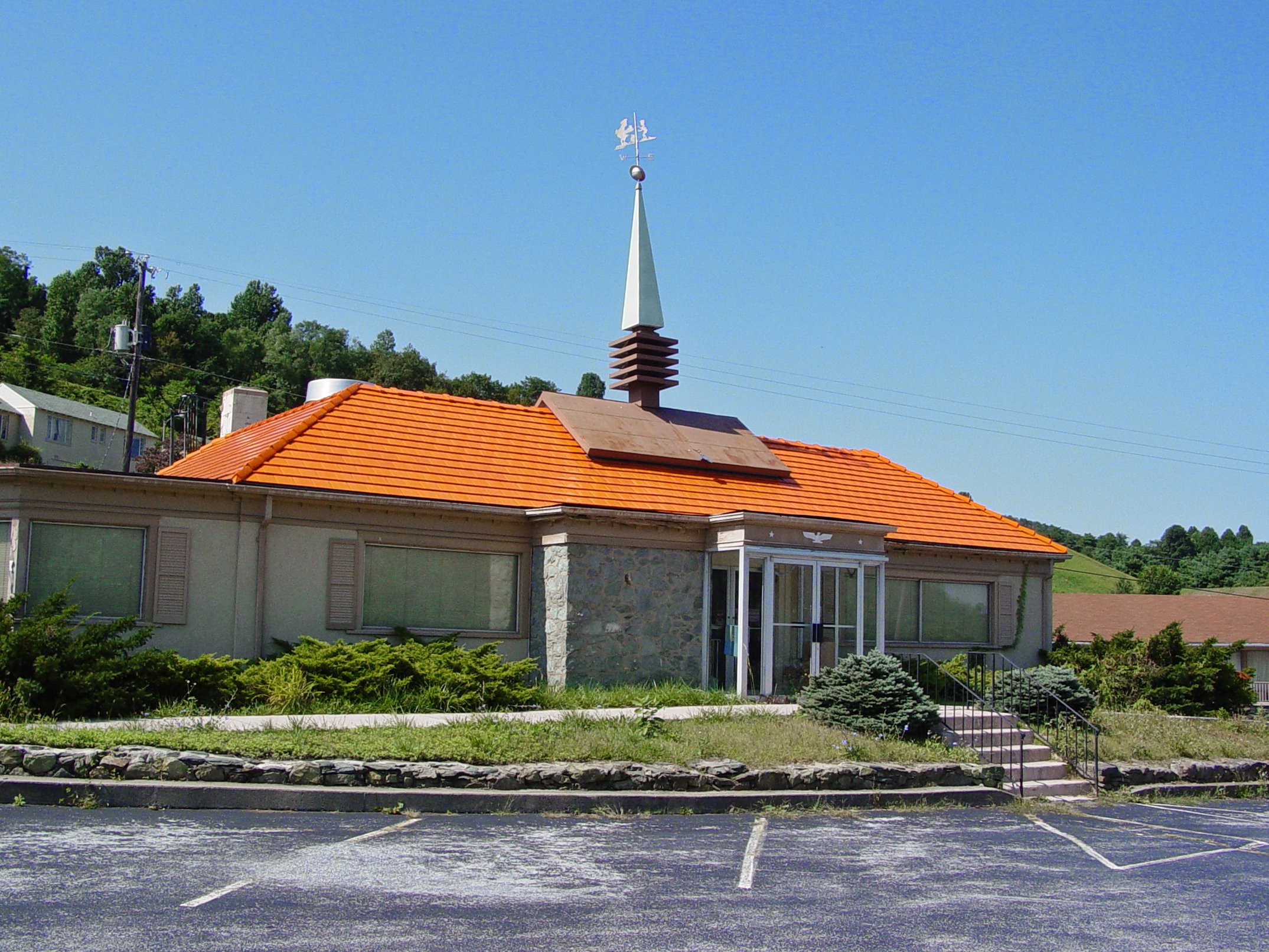
2025 revision.
As time went on, I came to dislike the processing on the set because I knew that the original photos weren’t so blue, knowing that I can do better now. Additionally, I think about it more because that set is an early favorite of mine, especially seeing as the area no longer looks like this. I had wanted to redo that set for a while, but could always find something else to work on. Then eventually, I decided that there was no better time than the present, so I just sat down and knocked it out. I think that the refreshed set looks more true to life, with better color accuracy. With the use of modern tools, I was able to do a better job correcting that yellow cast in the original shots and making it look better than it’s looked in a very long time.
While I appreciate the results, I really had to resist the urge to edit them like 44-year-old me would want to do. I had to remember that these photos were shot by someone half my age (I was 22 back then), and thus I didn’t want to take too many liberties so that the end result would still look like my work from that period. I recognized a long time ago that I can’t shoot like that anymore, and I can’t write like that anymore, either. So there is a certain measure of historic preservation involved there, just because I have grown and improved in the 22 years since the original photo set was completed. I imagine that if I were presented this exact same scene today, i.e. the buildings in their 2003 state, but with modern tools and my current skillset, this photo set would probably look very different than it did in 2003. It was fun to redo the processing on these images, but it’s like Irwin Kostal said about rescoring Fantasia back in the 1980s, that if you walk in Stokowski‘s shoes, you must also accept Stokowski’s straitjacket, i.e. you are creating something new that needs to slot into an existing work exactly. Everything is predetermined.
One of the first things that one has to do when doing a photo refresh/restoration/whatever on this sort of thing is to round up the original shots in order to prepare them for the new processing. I’m matching up the original shots with the ones used in the photo sets, and ensuring that all of the details line up (I describe what sort of stuff that I’m looking for when matching images here). In the process of that, I sift through many of the shots that were not used in the final set. Some of them are irrelevant, some of them have odd background details, and some just plain didn’t make the cut. I took 262 shots in the process of making the set, and ultimately used 63. I found six of them that seemed worth discussing, so here they are.
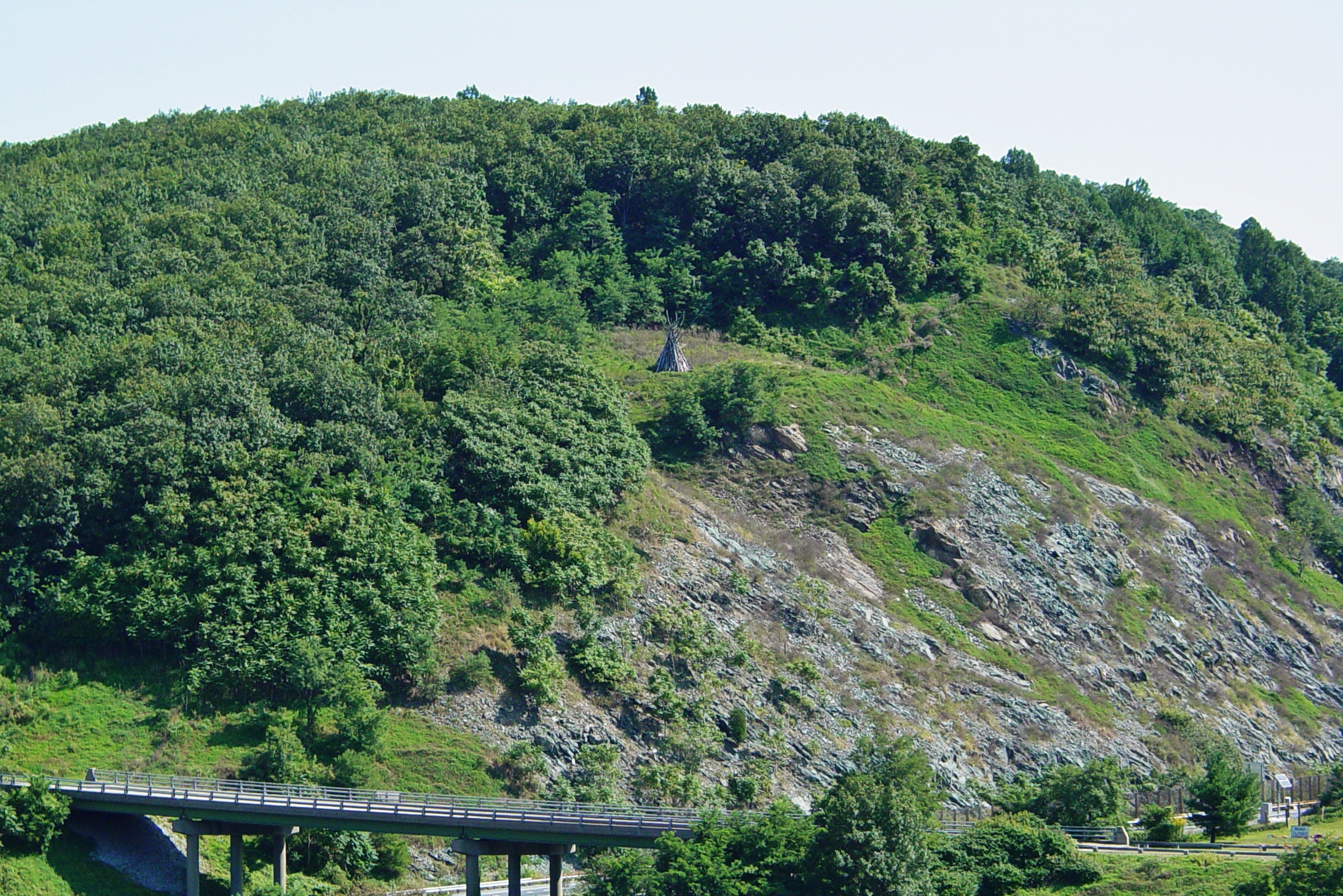
This one was irrelevant to the set, but it shows the tepee made out of sticks that once existed on the mountain. It appeared a few years prior to this photo shoot, and lasted about twenty years. Nobody that I am aware of knows why it was built there. I photographed it up close in 2020 using the drone, and at that time, it was a shadow of its former self. The tepee is completely gone now.
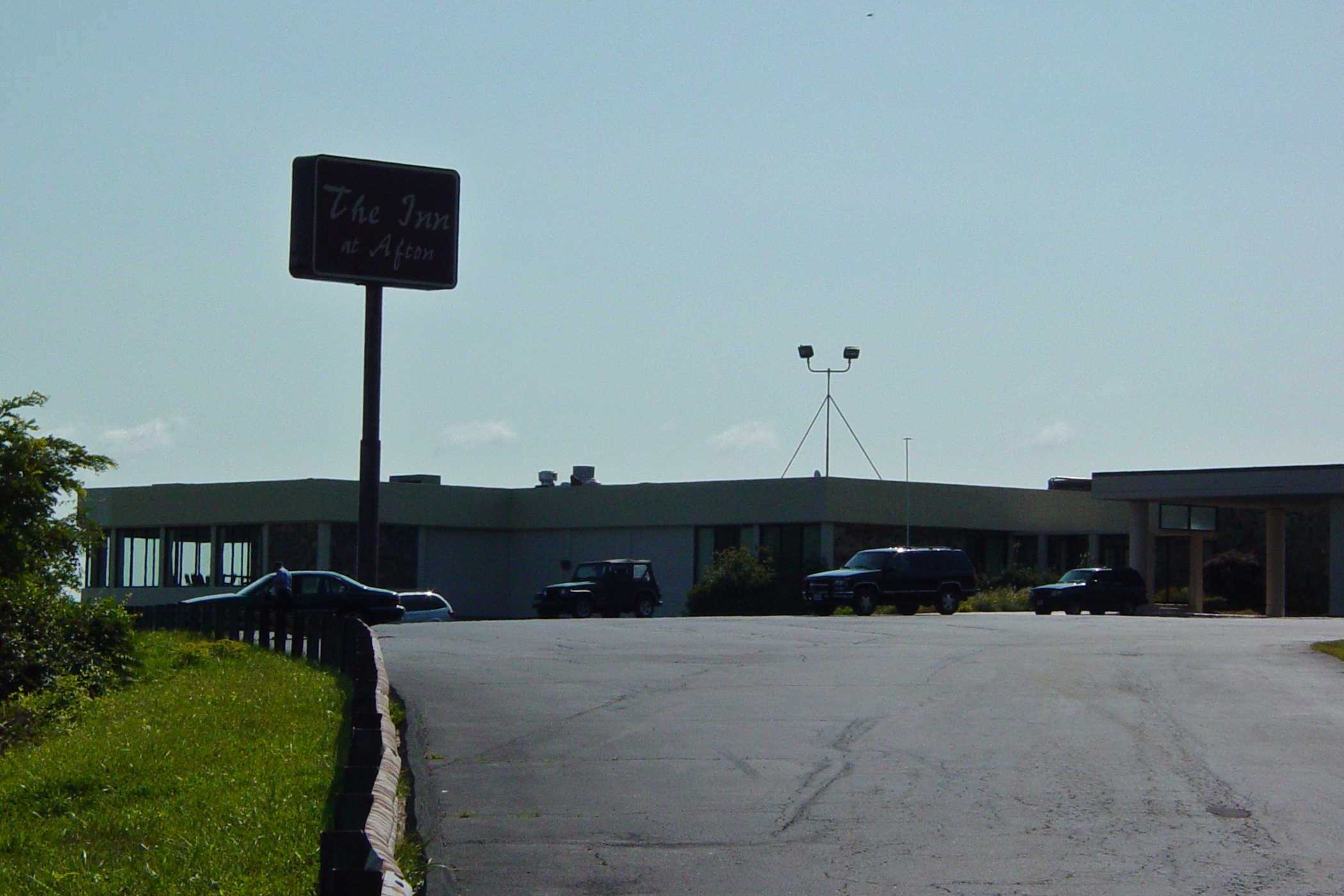
Here’s a dirty little secret for you: the two photos that I ran of The Inn at Afton weren’t taken with the rest of the set. I did this photo set in the late morning, and the lighting was unfavorable for The Inn at Afton at that time of day, as this photo, which was taken during the actual shoot, demonstrates. Back then, I didn’t give much consideration to lighting. It was a matter of fitting into my schedule and doing it. It didn’t matter if it was overcast or morning or afternoon. I scheduled and I shot. I now know that Afton Mountain photographs better in the afternoon because of sun positioning, but that wasn’t something that I considered at the time, and I had shot this in the 10:00 hour in the morning, because that’s when it fit in my schedule. And as such, the photos of The Inn at Afton ended up being unusable, specifically because it was backlit. So I substituted shots that I took in the late afternoon on December 29, 2002, a shoot which largely focused on Charlottesville, for the missing Inn at Afton shots. Considering that The Inn at Afton wasn’t the main focus of this set, I considered it acceptable.
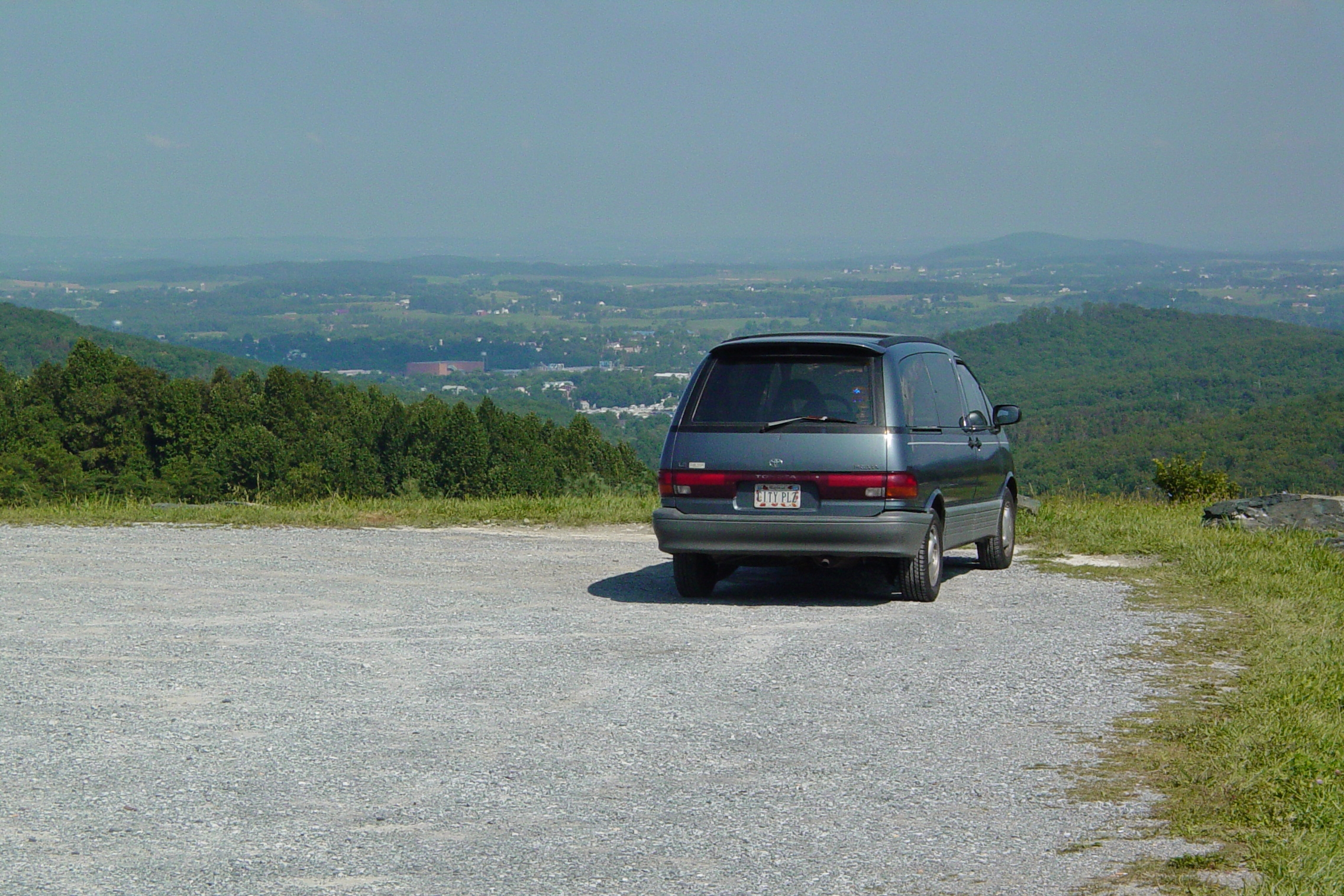
This shot shows my car at the time, a 1991 Toyota Previa, parked a few hundred feet away from The Inn at Afton. This is the sort of thing that reminds me of how old these photos really are. Even though I know that the photos are more than two decades old, I can sort of convince myself that they’re not that old. Then I see my very nineties car that was 13 years old at the time, and I realize, yep – it’s old. If it tells you anything, I got rid of the Previa in February 2006, i.e. in six months, it will have been gone for twenty years.
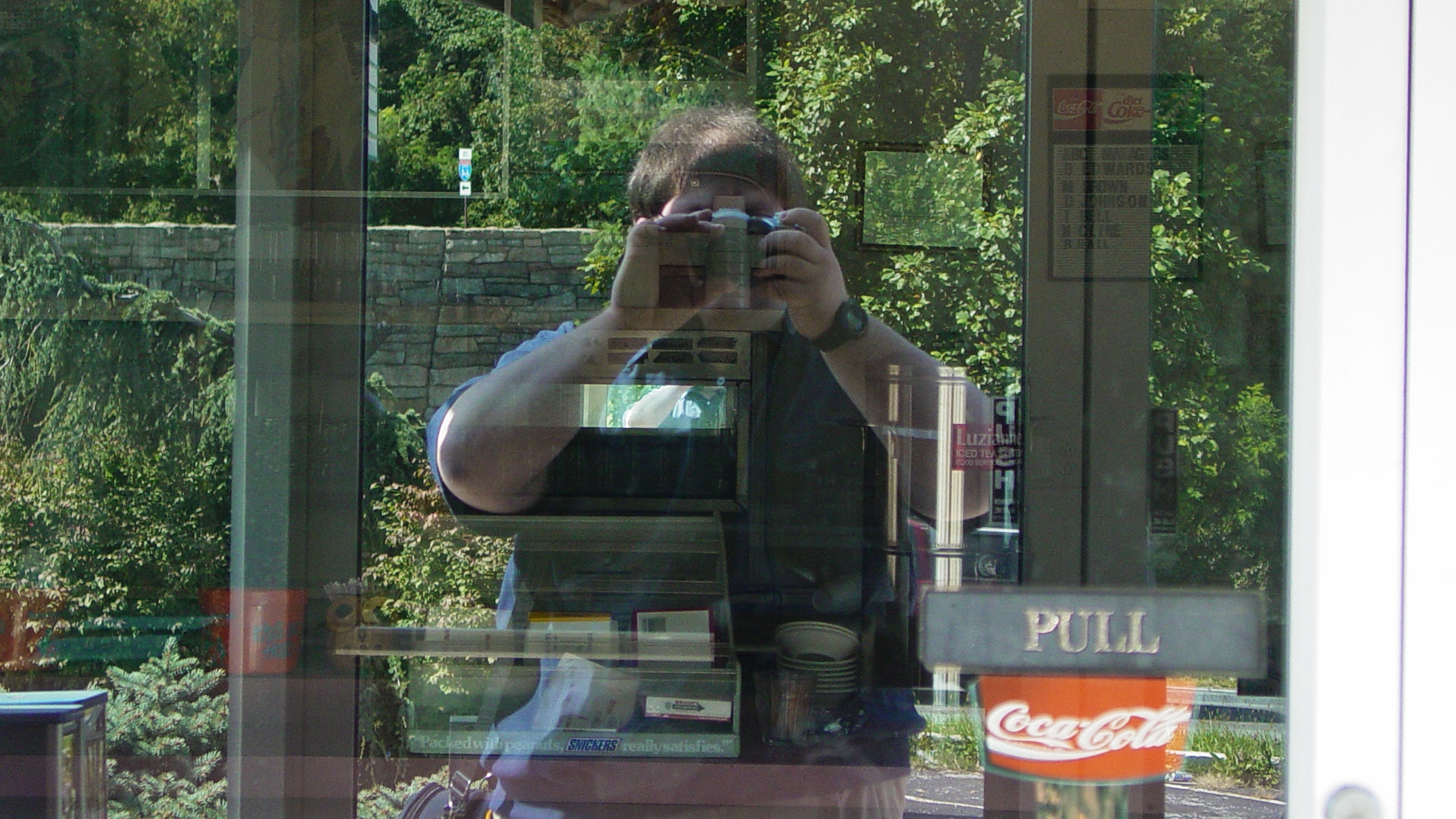
And here’s another example of the passage of time. I don’t remember why I shot this. Clearly, I was aware that I was catching my reflection, but beyond that, I am not sure I had intended this shot as something of a selfie, or as a way of documenting the interior. I believe it was the latter, but the result was more the former. But look at me – I have actual hair on the top of my head, and I was pretty chubby back then. Note also that I am wearing business casual for this shoot. That was very unusual for me, then as now, but one of my activities later that day was an interview at a hotel up in Harrisonburg. But that affected my experience with this shoot, because I had to make sure to stay crisp and clean for my interview, and thus messing up my outfit in any way was a really big deal. I ultimately didn’t get that job, but whatever.
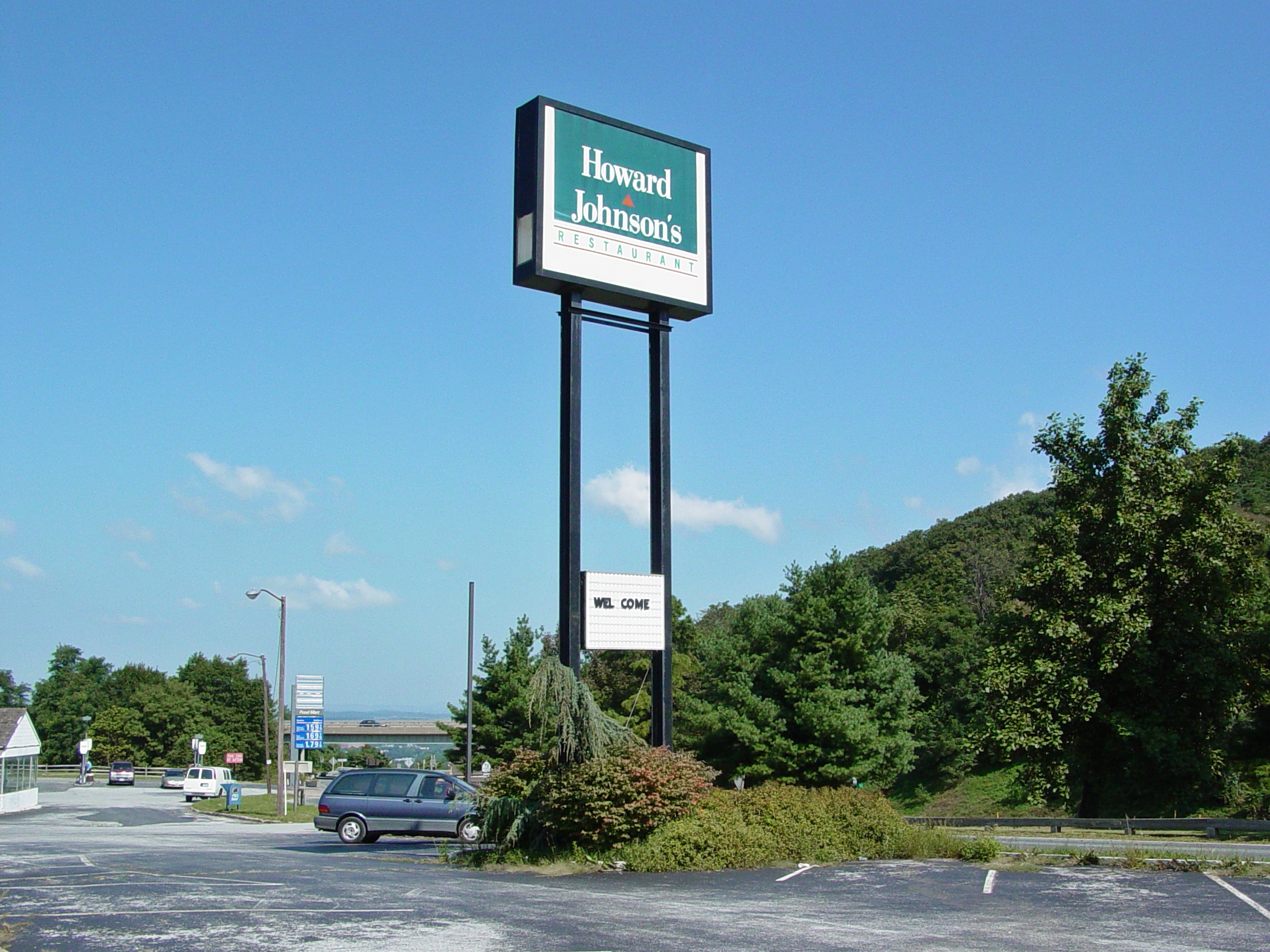
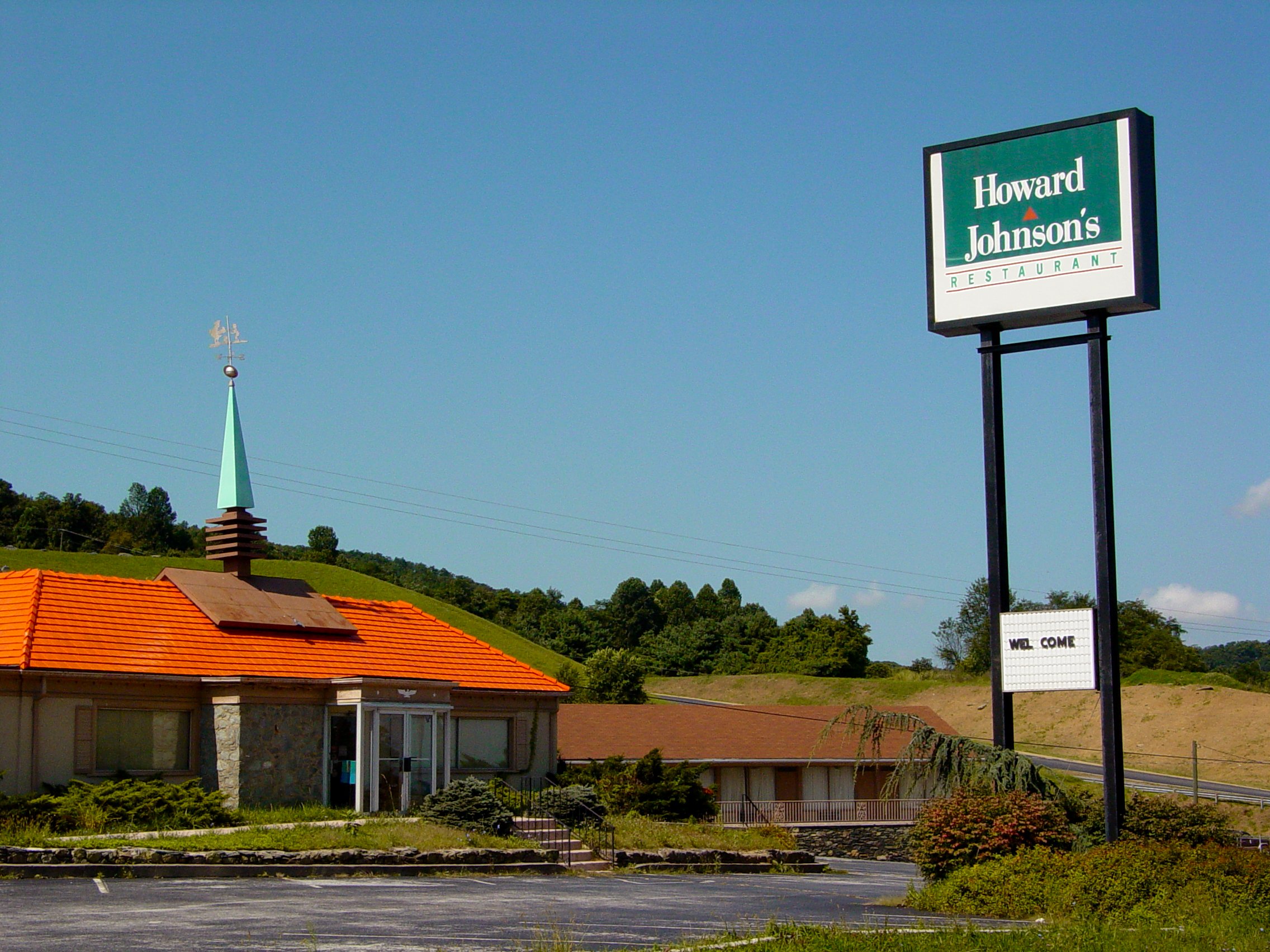
I’ve always found cars to be a touchy subject when it comes to photo sets. Cars really can make or break a shot, in that their placement can help or hinder the message, and on many occasions, I’ve had to reshoot a shot because a car got into it in an inconvenient place. However, one thing that I really try to do is to keep my own car out of my shots, or at least try to blend it in. In the case of the Afton Mountain set, I parked it in front of the Howard Johnson’s, which made enough sense from a parking standpoint, but not from a photography standpoint. My car appears in the background of the #58 shot, and to me, that is like when movie and television productions inadvertently show crewmembers on screen. It’s a “visible crew” mistake because it shows production equipment. Nowadays, I take more care to park my car somewhere that won’t be in my shots, or, failing that, I will try to make it blend in as much as possible, such as parking it amongst a sea of other cars. This shot was a good enough shot, but my car was very visible, and thus it didn’t get used. I ultimately used a shot where my car was hidden behind a very large bush.
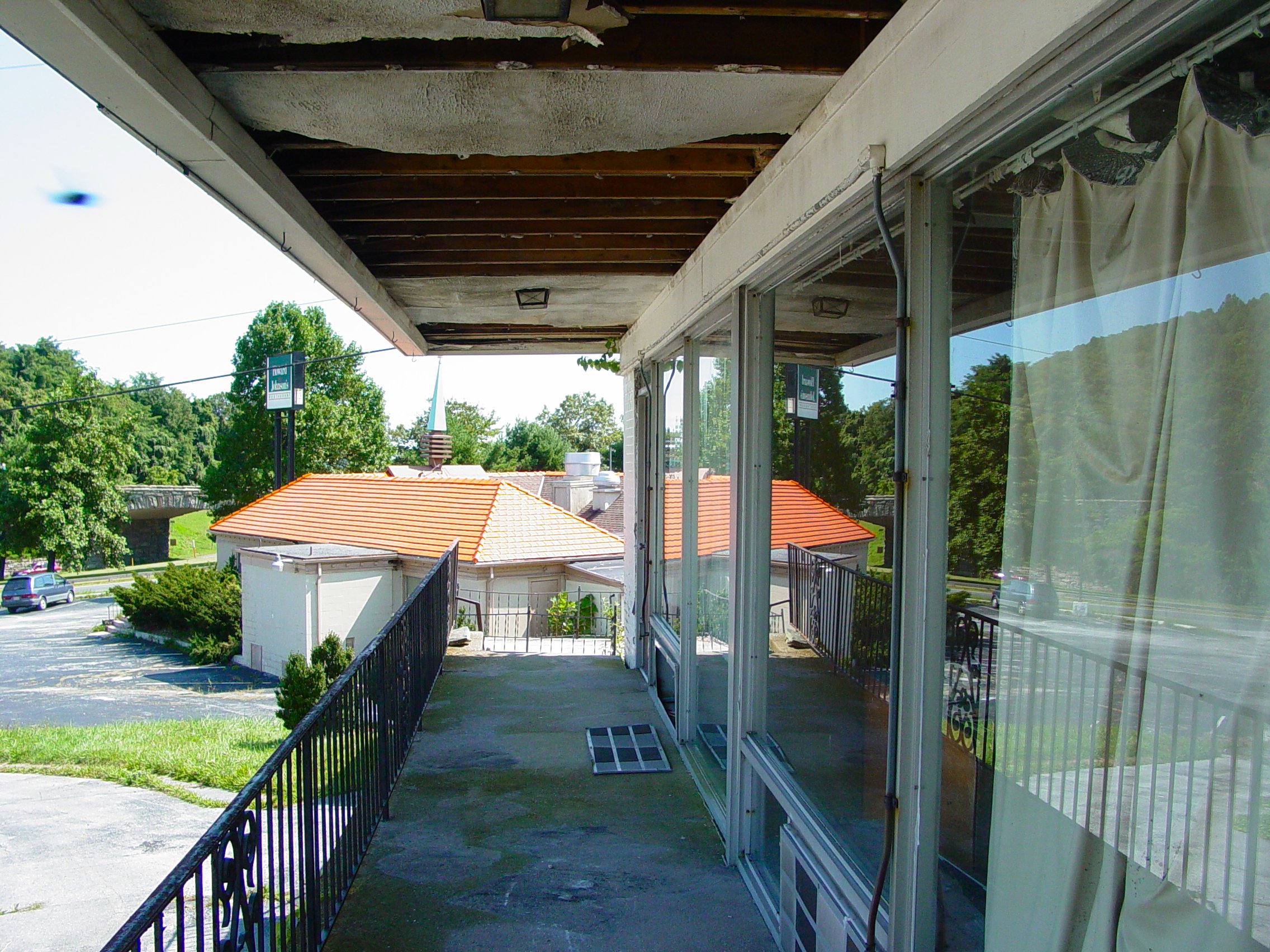
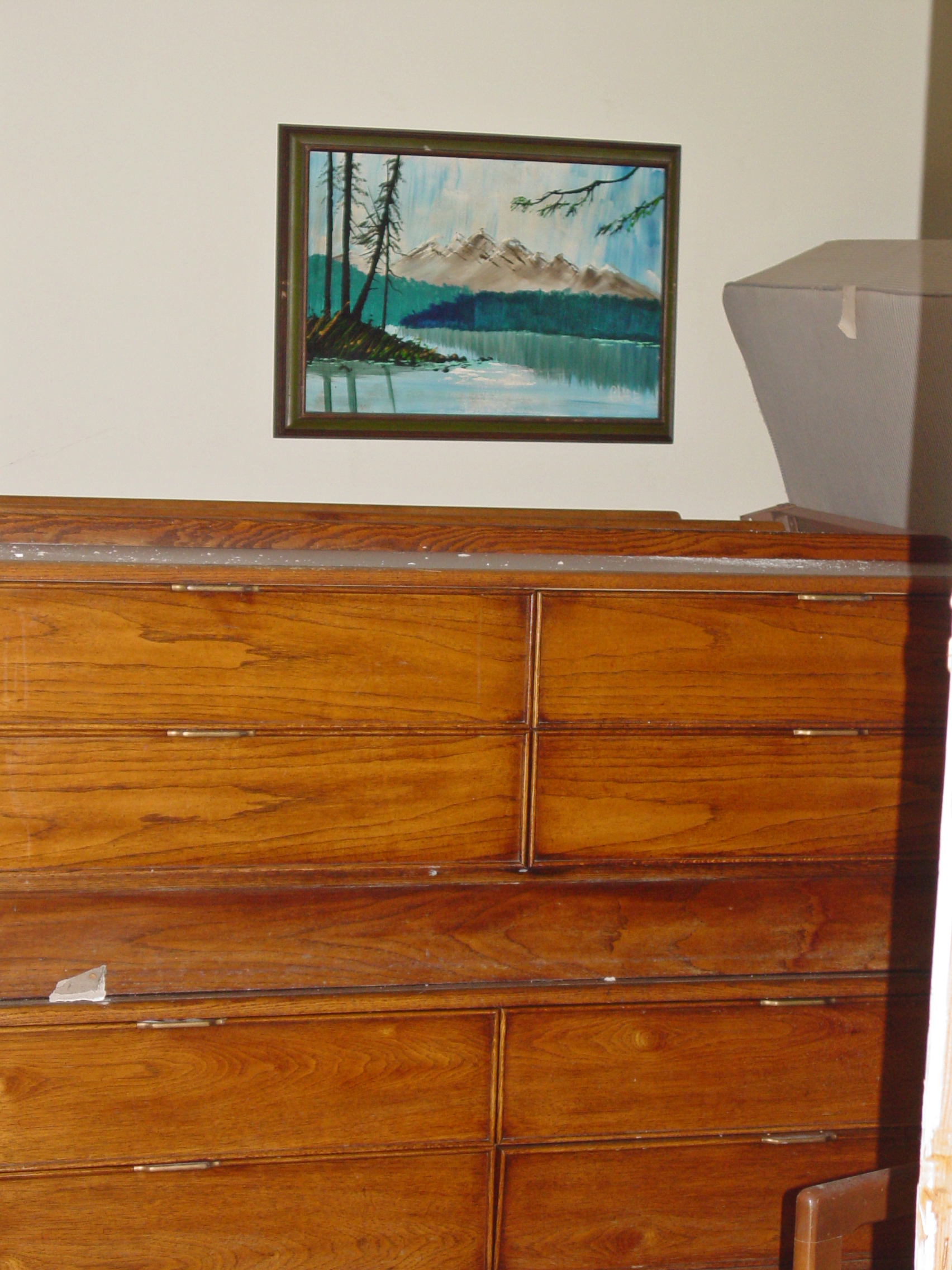
This is my only interior photo of the various hotel rooms. I was treading very lightly with this photo shoot, in part because I was dressed for a job interview later in the day, but also because at the time, it felt improper to enter any buildings, seeing as much of the property was still in use. This was one of the outlying rooms at the Skyline Parkway Motel, and I shot it from outside through an open door. In hindsight, I wish that I had explored these areas more deeply, considering that all of this is gone now, but I can’t change that now. I did, however, correct that in 2011 with the second Afton Mountain photo set, where, while I didn’t actually enter any of the buildings because of improper footwear (it was an impromptu photo shoot, and I was wearing flip flops), I got quite close and got some detailed shots of some of the rooms through windows and such.
I find it fun to occasionally revisit older content like this. It shows how much I have grown and changed as a photographer, because I certainly wouldn’t shoot some of those shots today the way that I did in 2003, but that was the state of my art back then. I was doing my best, then as now, but my technique became more refined with the passage of time. 22-year-old me wouldn’t ever imagine the way that 44-year-old me gets down low in a squating position for some shots, and how after a day with lots of squatting, I’m paying for it the next day with muscle soreness.
Meanwhile, I’ve got several new photo sets on the way, and those will be released when they’re ready. I’m doing multiple sets as a single project, so it takes longer than if I was doing them individually. Stay tuned!